
Selling a $45K Machine with an $18 Demonstrator
Sales enablement • Experience design • Product storytelling
oldie but a goodie
The Challenge
Tennant manufactures large industrial cleaning equipment used in places like airports, warehouses, hospitals, and stadiums. These machines are powerful, complex — and very large.
Which creates an interesting sales challenge.
The best way to understand the machine is to see it in action. But transporting a 2,000-lb floor scrubber into a sales meeting isn’t always practical.
Sales teams needed a way to clearly explain the product — often in hallways, warehouses, or quick conversations between meetings.
The Idea
Instead of recreating a full presentation, I designed a portable product experience.
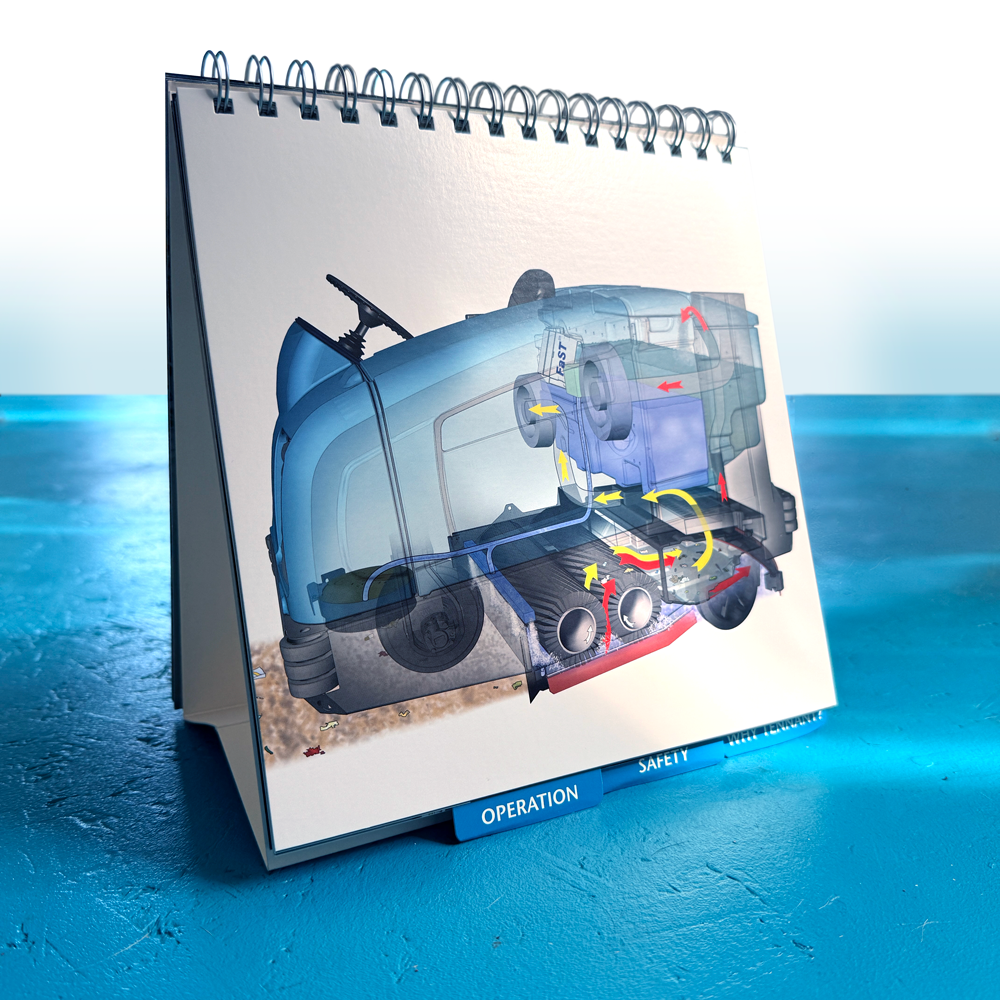
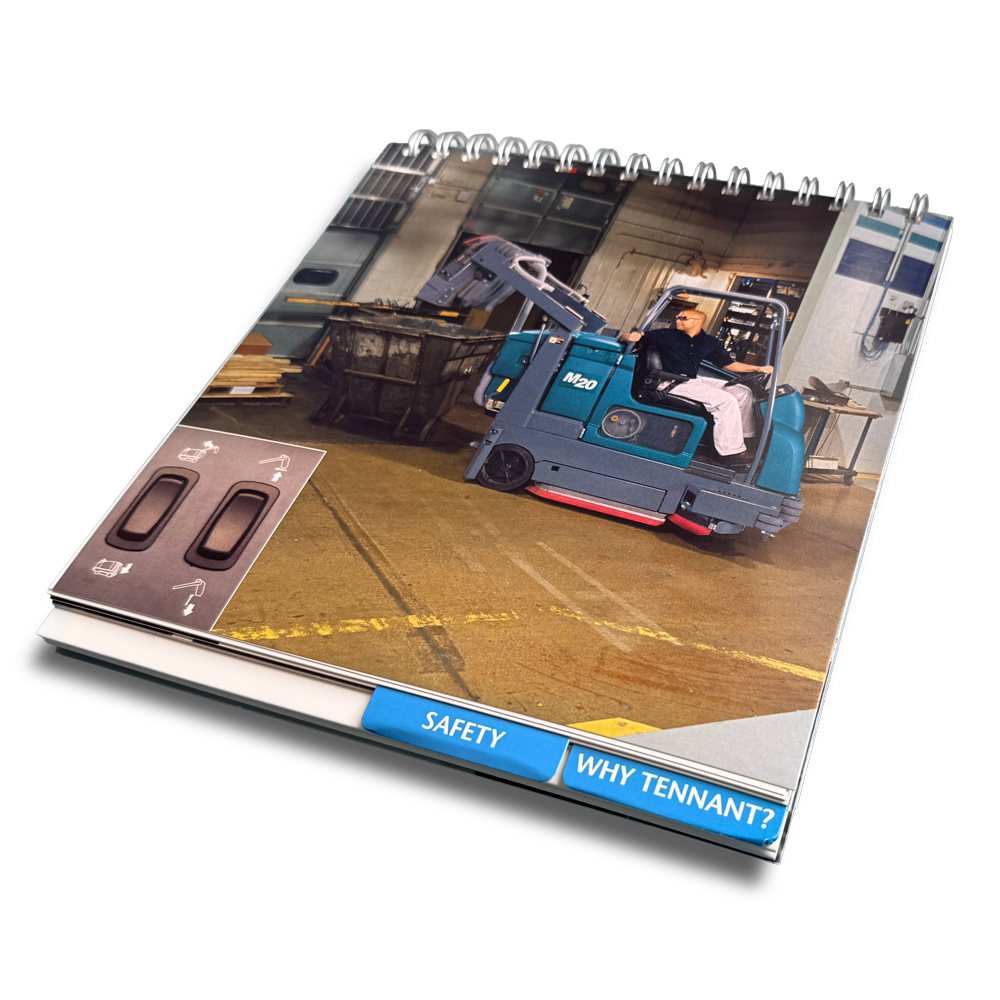
A content-rich flip chart that allowed sales reps to walk customers through the product visually, feature by feature.
Each page combined:
- Product photography in real-world environments
- Close-ups of key features
- 3D graphics explaining internal mechanics
- Quick statistics readable at a glance
Talking points were printed on the back of each page so the sales rep could guide the conversation easily.
The Result
The demonstrator quickly became a favorite tool for the sales team.
It helped start product conversations almost anywhere — in hallways, warehouses, and quick meetings between other work.
In several cases, sales representatives reported closing deals for machines priced around $45,000 without the customer ever seeing the equipment in person.
A simple, portable tool turned a complex product into a clear and engaging story.
BEHIND THE WORK
Alongside the demonstrator, I led the creation of a full product launch kit that included:
- product literature
- photography
- video assets
- interactive demonstrations
- content-rich paper presenters
I directed the photography, managed production with the printer, coordinated timelines, and kept the launch kit within budget.
One Thing I Believe
Sometimes the best solution isn’t more technology.
It’s understanding the environment where the conversation actually happens — and designing for that moment.
A well-designed explanation can be just as powerful as the product itself.